
New on Embodia: Reframe Rehab's Whole-Person Pelvic Health Patient Education
Introduction
Patient education has always been a cornerstone of good physiotherapy practice. But getting the right information into the right hands — in a way that is clear, accessible, and actually read — remains one of the most persistent challenges in clinical care. That gap is exactly what a new collection of patient education resources on Embodia, created by Carolyn Vandyken of Reframe Rehab, is designed to close.
Who Is Carolyn Vandyken?
Carolyn Vandyken is a pelvic health physiotherapist and educator with decades of clinical and teaching experience. Through Reframe Rehab, she has developed a body of work that is widely respected in the pelvic health community for translating complex pain science and biopsychosocial principles into practical, patient-friendly language. Her approach moves well beyond anatomy and exercise, addressing the full picture of what drives pain and dysfunction — including the nervous system, lifestyle, emotions, stress, and beliefs.
What Is Now Available on Embodia?
The collection covers a broad range of topics relevant to pelvic health and persistent pain practice, organized into two categories: condition-specific education and therapeutic concept education.
Condition-specific resources include:
- What Is Pelvic Floor Therapy
- Understanding Pelvic Organ Prolapse
- Understanding Bladder Leakage
- How Your Bladder Works: Understanding Urge, Urgency, and Your Nervous System
- Persistent Pelvic Pain
Therapeutic concept resources include:
- Pelvic Health and Overlapping Pain Conditions
- How We Think Drives Our Pain and Disability
- Lifestyle Components to Address Nervous System Dysregulation
- ANTS: Changing Your Unhelpful Beliefs
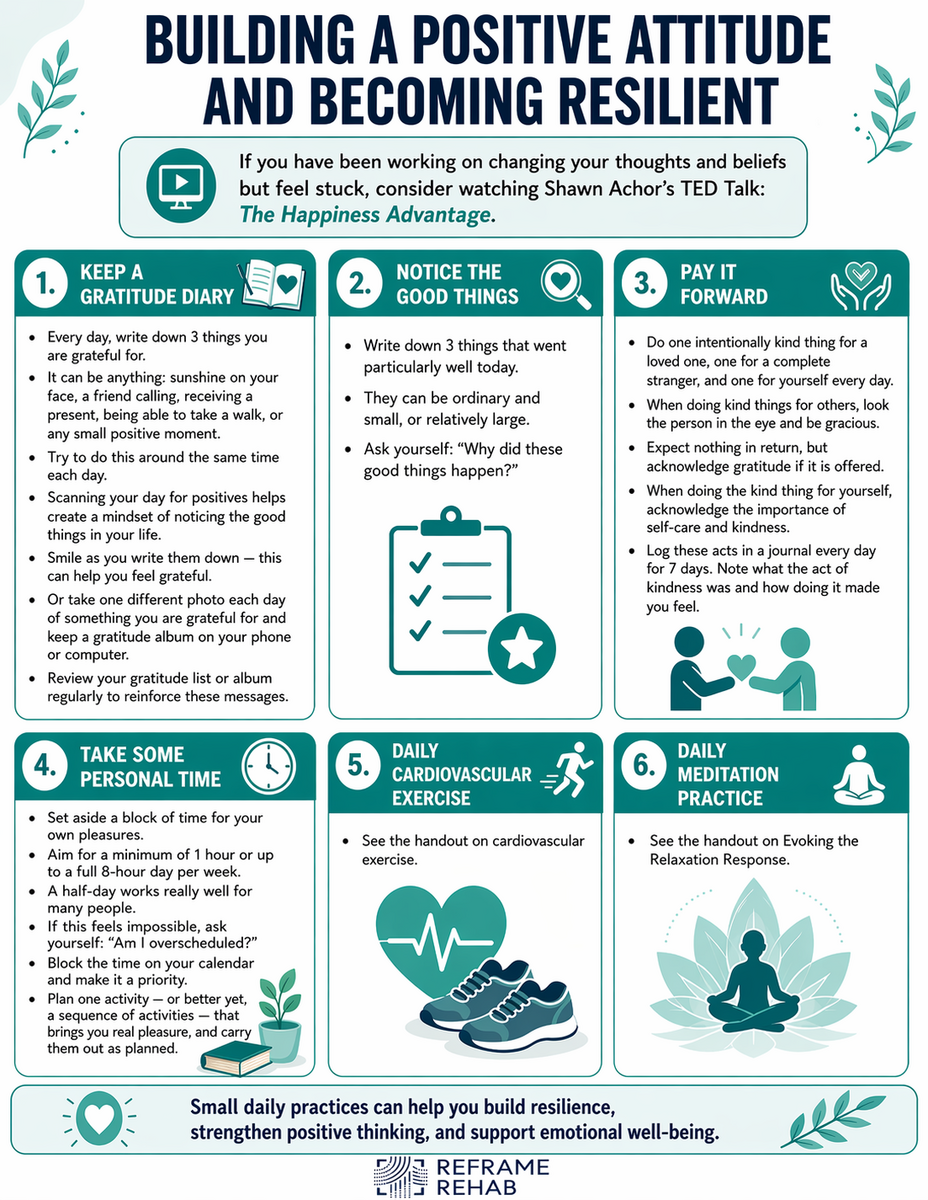
- Building a Positive Attitude and Becoming Resilient
- Evoking the Relaxation Response
- Non-Nociceptive Input (NNI)
- Walking for Cardiovascular Health
- Yoga Practice for Persistent Pain
Each resource has been formatted as accessible plain text — no jargon, no catastrophizing language, and no passive reassurance. The content is direct, solution-focused, and grounded in current pain science.
Here's an example of one of the pieces of new patient education:
Why the Biopsychosocial Approach Matters for Patient Education
One of the defining features of this collection is its consistent whole-person framing. Rather than presenting pelvic conditions as purely structural or mechanical problems, each resource acknowledges the role of the nervous system, stress, sleep, beliefs, lifestyle, and social connection in driving and maintaining symptoms.
This matters because patients who understand the full picture — that pain and dysfunction are influenced by more than just tissue — are better equipped to make meaningful changes between sessions. Education that only explains anatomy gives patients a passive role. Education that explains neuroplasticity, the stress response, pain system hypersensitivity, and the power of lifestyle choices gives patients agency.
Consider the bladder urgency resource as an example. Rather than simply describing overactive bladder as a physical condition, it explains that the bladder is part of the nervous system, that urgency signals can be retrained, and that urges are not emergencies. That reframe alone can shift a patient's relationship with their symptoms before they have done a single exercise.
For clinicians working with complex presentations — including persistent pelvic pain, overlapping pain conditions, or patients with high levels of catastrophization or fear-avoidance — having this education pre-loaded and ready to share can significantly extend the work done in the clinic room.
How to Share Patient Education Through Embodia's HEP
Embodia's Home Exercise Program (HEP) feature allows clinicians to prescribe exercises and share patient education from the same platform. Education can be added alongside an exercise program or shared as standalone content — useful for sessions where you want to seed a concept before diving into it at the next appointment.
Sharing education takes just a few clicks: find the resource in the patient education library, click Share, and optionally add a personalized note for your patient. Your patient receives it directly through the Embodia app or web platform, where they can read it at their own pace between sessions.
This means that a conversation you begin in the clinic about pain system hypersensitivity, or the link between stress and bladder urgency, can continue at home — reinforced by clear, well-written education from a trusted clinical source.
Who Will Benefit Most?
This collection is particularly well-suited for:
- Pelvic health physiotherapists managing bladder, bowel, prolapse, and pain conditions
- Pelvic OTs supporting patients with the functional daily living impacts of pelvic dysfunction
- Pain-focused practitioners working with persistent or complex presentations
- Any clinician whose patients would benefit from understanding the nervous system's role in their symptoms
Getting Started
The Reframe Rehab patient education collection by Carolyn Vandyken is available now in the Embodia patient education library. If you are not yet using the education sharing feature, this Embodia HEP guide walks you through the process step by step.
Good patient education doesn't replace the therapeutic relationship — it deepens it. When patients arrive at their next session having read and reflected on why their nervous system is sensitive, or what lifestyle factors are keeping their symptoms dialled up, the clinical conversation starts from a much more productive place.
That is the value this collection brings to your practice.

BHSc (PT), CredMDT, CCMA
Carolyn is the co-owner of Reframe Rehab, a teaching company engaged in breaking down the barriers internationally between pelvic health, orthopaedics and pain science. Carolyn has practiced in orthopaedics and pelvic health for the past 37 years. She is a McKenzie Credentialled physiotherapist (1999), certified in acupuncture (2002), and obtained a certificate in Cognitive Behavioural Therapy (CBT) in 2017.
Carolyn received the YWCA Women of Distinction award (2004) and the distinguished Education Award from the OPA (2015). Carolyn was recently awarded the Medal of Distinction from the Canadian Physiotherapy Association in 2021 for her work in pelvic health and pain science.
Carolyn has been heavily involved in post-graduate pelvic health education, research in lumbopelvic pain, speaking at numerous international conferences and writing books and chapters for the past twenty years in pelvic health, orthopaedics and pain science.